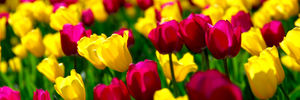
Plant Fall bulbs now for spring colour!
Plant Fall Bulbs Now for a Beautiful Spring Garden
Want a garden filled with tulips, daffodils, crocuses and other colourful blooms as soon as the snow disappears? Fall is the time to make it happen.
Spring-flowering bulbs are one of the easiest ways to add early colour to your garden. Plant them in fall, give them a long winter's rest, and they'll reward you with flowers just when you're ready to see the garden come back to life.
Why Do We Plant Spring Bulbs in Fall?
Many of our favourite spring-flowering bulbs—including tulips, daffodils, hyacinths and crocuses —need a prolonged period of cold temperatures to trigger their spring growth and flowering.
That makes them particularly well suited to our Central Ontario climate.
Bulbs can generally be planted from September until the ground freezes. In fact, there's no need to rush tulips into the ground during warm September weather. Planting later in the fall, once the soil has cooled, can be beneficial.
Daffodils, alliums and other bulbs that benefit from developing roots before winter can go in a little earlier.
Choose the Right Location
Most spring-flowering bulbs perform best in a location with:
-
Full sun to light shade
-
Well-drained soil
-
No standing water during winter or spring
-
At least six hours of spring sunshine for the best flowering
Remember that areas beneath deciduous trees can be excellent locations for early bulbs. Crocuses, snowdrops and daffodils can receive plenty of sunlight in early spring before the trees leaf out.
Good drainage is particularly important. Bulbs are much more likely to rot in cold, wet soil than they are to be damaged by our winter temperatures.
How to Plant Fall Bulbs
You don't need to plant bulbs one at a time. For the most natural and impressive display, we like to plant them in groups, drifts or clusters.
Prepare the planting area by loosening the soil and incorporating compost or a good-quality garden soil if your existing soil needs improvement.
As a general rule, plant bulbs at a depth approximately two to three times the height of the bulb, measured from the base of the bulb to the soil surface.
For example:
Large bulbs such as tulips, daffodils and alliums are generally planted about 15–20 cm (6–8 inches) deep.
Smaller bulbs such as crocus, snowdrops and muscari are generally planted about 8–10 cm (3–4 inches) deep.
Place bulbs with the pointed end facing upward. If you can't tell which end is up, don't worry too much—the growing shoot will usually find its way toward the surface.
Cover with soil and water the area well after planting to help settle the soil around the bulbs and encourage root development.
A light layer of mulch can help moderate soil temperatures and moisture over winter.
Do Fall Bulbs Need Fertilizer?
Bulbs already contain much of the energy they need to produce their first spring flowers, so heavy fertilizing at planting isn't necessary. A light sprinkling of an organic fertitilzer such as Hen Manure is adequate and may help deter rodents.
Rather than automatically adding bone meal to every planting hole, focus first on healthy soil, good drainage and proper planting depth. These factors will have a much greater impact on long-term success.
What About Squirrels?
Anyone who has planted tulips and returned the next morning to find little holes throughout the garden knows that squirrels can be enthusiastic bulb hunters!
If squirrels, chipmunks or other wildlife are a problem, try planting bulbs deeply and firmly replacing the soil over the planting area. A piece of chicken wire or similar mesh laid over newly planted areas and secured temporarily can also discourage digging.
You can also choose bulbs animals are less interested in.
Daffodils, alliums, fritillaria and snowdrops are generally much less appealing to squirrels and deer than tulips and crocuses.
Plant More Than You Think You Need
One of the most common mistakes with fall bulbs is simply not planting enough of them.
Ten tulips scattered through a large garden can disappear visually. Twenty-five or fifty planted together can make a statement.
For a more natural appearance, avoid planting bulbs in perfectly straight rows. Instead, plant them in loose groups or drifts, repeating the same variety or colour through the garden.
For an even longer season of colour, combine bulbs with different flowering times—from early crocuses and snowdrops through daffodils, tulips and late-spring alliums.
After Your Bulbs Flower
Once your bulbs have finished flowering in spring, remove the spent flowers if desired, but leave the foliage in place.
Those green leaves are doing important work. Through photosynthesis, they're replenishing the energy stored in the bulb for next year's flowers.
Allow the foliage to turn yellow and die back naturally before removing it.
A great garden-design trick is to plant bulbs among emerging perennials. As the bulb foliage begins to fade, plants such as hostas, daylilies, catmint, ornamental grasses and other perennials grow up around it and help hide the yellowing leaves.
Tulips vs. Daffodils: Will They Come Back Every Year?
Not all bulbs behave the same way in the garden.
Daffodils, crocuses, snowdrops and many alliums can return and multiply for many years when they're happy in their location.
Many modern tulips, particularly large-flowered hybrid varieties, put on their best show in their first spring. Some will return for several years, while others gradually decline. Species tulips and certain perennializing varieties are better choices if your goal is a display that returns reliably.
For the biggest tulip show every spring, many gardeners simply add some new bulbs each fall.
A Little Work in Fall = A Lot of Spring Colour
There's something especially satisfying about seeing the first crocuses and daffodils push through the soil after a long Canadian winter.
And the best part is that most of the work was done months earlier.
Plant a few bulbs—or a few hundred—this fall, and when spring arrives, you'll be very glad you did.
Visit Ego's Garden Centre this fall to explore our selection of spring-flowering bulbs and let us help you choose varieties for your garden, from early crocuses and classic daffodils to colourful tulips, alliums and more.
- Kristin Ego
- Tags: bulbs fall tulips daffodils